A Contingent Line of Credit (CLOC) is a new financial instrument tailor-made for microfinance institutions and their smallholder clients and a powerful addition to a portfolio that charts a future of business growth.
A flexible blend of three indexed financial instruments to manage risk have the potential of meeting a rural family’s circumstances and need, strengthening their resilience across their journey to prosperity.
Rigorous field trials across Africa show that agricultural index insurance can stabilize small-scale farmers financially after a shock and even increase their agricultural investments, both of which could improve productivity and profitability in the West African cotton value chain.
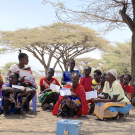
Midline results from an ongoing impact evaluation in northern Kenya found that a comprehensive livelihood building program yielded substantial economic benefits for women directly enrolled as well as their non-enrolled neighbors.
National governments can pre-finance support with disaster risk insurance, but there has been no objective way to determine whether it is more effective than paying the costs as they arise. New research has found a way to evaluate risk insurance and to build a metric for improving contract design.
Small-scale farmers often don't adopt technologies that build resilience, like stress-tolerant seeds and index insurance, because they don't provide benefits in every year. New research shows how to maximize learning with these technologies to quickly build lasting adoption and long-term resilience in rural communities.
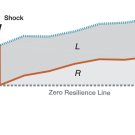
Resilience+ (also Resilience-Plus) describes when rural families are more immediately able to withstand a shock and when that knowledge increases their investment in agricultural productivity. Generating Resilience+ could accelerate efforts to reduce poverty and spur agricultural growth.