Improving index insurance products, contract design, marketing and policy can contribute to delivering on its promise of promoting independence, prosperity and resilience among these smallholder farmers.
Our results on soil variation shows an opportunity to target improved seed and other interventions based on the variation in soils within a village or larger geographic area.
Lack of well-tailored innovations such as suitable hybrid seeds to overcome pest and diseases in mid-altitude areas has been acknowledged as a major shortcoming which could further be associated with inadequate investment in research and development.
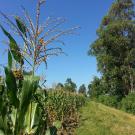
In mid-altitude regions, the option to purchase WSC maize seed unambiguously increased productivity, but most significantly among better-resourced farmers who had historically used hybrid seed.
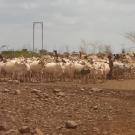
On average, AMA Innovation Lab researchers find that after the drought, insurance leads to a 36 percent decrease in sales of remaining livestock, and a 25-percent reduction in household meal consumption.
With new drought tolerant (DT) maize varieties ready to go to market, and with our growing knowledge of how to design effective insurance products for small-scale agriculture, now is an opportune moment to close this critical knowledge gap.
BASIS researchers, in partnership with leading geo-spatial software engineering firm (SI Organization), developed a potential solution to these problems by using satellite information at high resolution, coupled with better modeling approaches, to reduce basis risk and improve index insurance performance.
Compared to cash transfers, where it is possible to simply give the poor target population money, asset transfers are clearly more complicated and have more limited scope since not everyone can be a successful small-scale farmer.
Diante destes argumentos, a questão ultimamente tem sido se subsídios inteligentes e temporários podem contribuir para induzir a mudança tecnológica e reduzir a pobreza em áreas de baixa produtividade agrícola, como o centro de Moçambique.